Topological Data Analysis: Tools and Some Applications
Master of Arts in Mathematics
University of Toledo
2021
Dr. Funda Gültepe
About the thesis
Topological Data Analysis (TDA) combines topology, the mathematical study of shape, with data analysis. The thesis introduces the foundational tools of TDA, including simplicial complexes, homology, and persistent homology, and discusses how these tools are used to study the shape of data in fields like medical imaging and autonomous navigation.
Topology
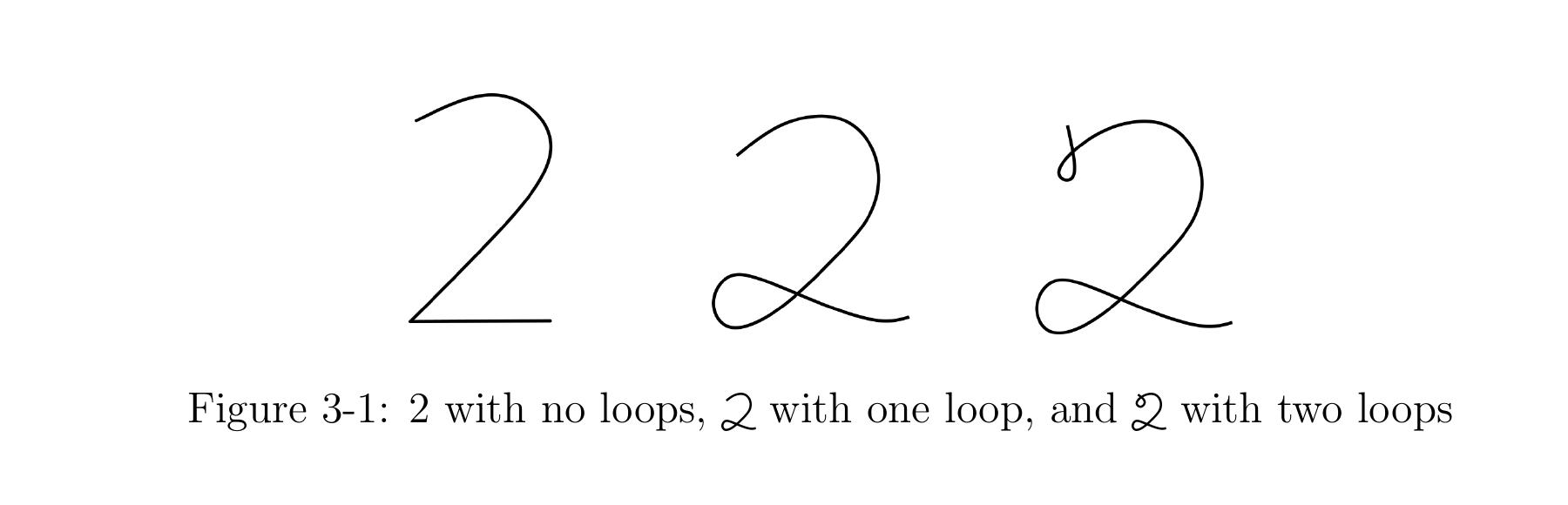
Topology is the study of shapes you can bend, stretch, or fold without tearing. Two shapes are the same if you can deform one into the other. What TDA cares about most is how many holes a shape has.
Abstract
Topology looks to explore the essential information encoded in geometric objects. Data often focuses on numbers and other units of information. When combining these two fields, we get Topological Data Analysis (TDA), where we explore data using specific properties of geometric objects. In this paper, we introduce the necessary background for topology in the context of data, including simplices and complexes, and how we use these to create geometric structure on discrete spaces. Different types of homology are discussed, including persistent homology and its tools such as barcode and persistence diagrams. Finally, we introduce some applications for TDA that have been used in different contexts.
Simplicial complexes
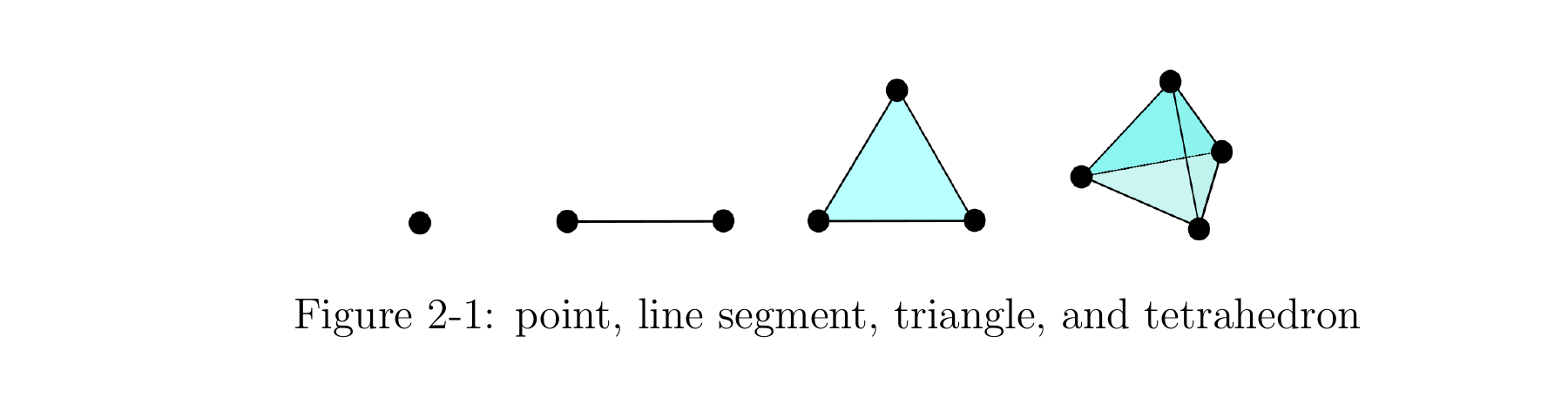
Before TDA can study the shape of a dataset, it has to build that shape from the data. The building blocks are simple: points, line segments, triangles, tetrahedra, and so on.
Persistent homology
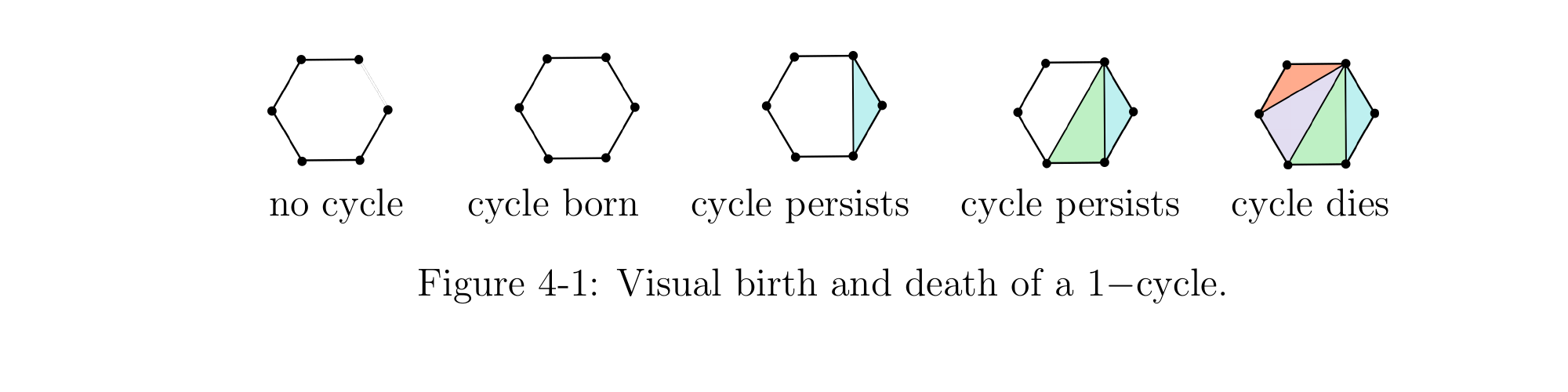
Real data is messy, so TDA looks at a complex at many scales at once. Cycles appear and disappear as the complex grows. The ones that stick around across many scales are the ones that matter.